
What Happens to Your Car Insurance After a Total Loss Claim

Erandi García is an Acceptance Bilingual Senior Copywriter. With nearly 10 years of experience in content creation, her career has allowed her to explore the world through internat...

Cyndi Wright is the senior copywriter and content manager at Acceptance Insurance. With a career that has spanned many facets of writing across a variety of platforms, Cyndi loves ...

Rose Carter is an accomplished content strategist and marketing leader with a proven track record of creating impactful, results-driven content. With expertise in writing, editing,...

When your car is totaled after a car accident, the stress goes beyond the wreck itself. You need to figure out what your insurance company will pay, what happens to your car insurance policy, and how to stay covered while you find your next vehicle. This guide walks you through every step of a car insurance total loss claim.
What It Means When Your Car Is Considered a Total Loss
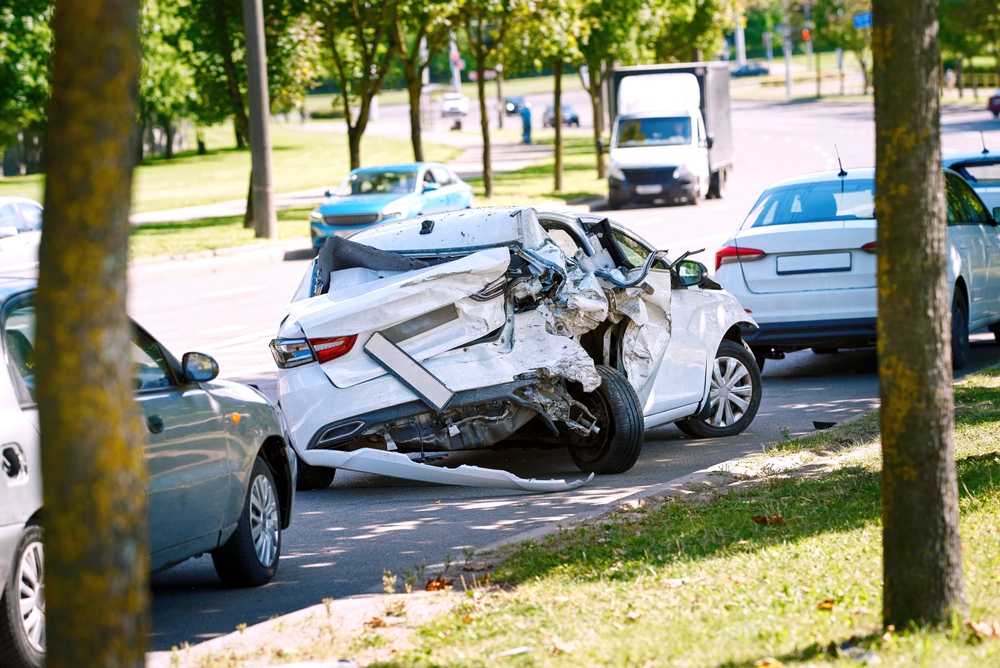
A total loss means the damage to your vehicle is so severe that repairing it doesn’t make financial sense compared to replacing it. Generally speaking, a car is totaled if repair costs exceed its value.
Insurance companies use a formula to assess total loss. They compare estimated repair costs plus salvage value against the car’s actual cash value (ACV). For example, a 2018 Honda Civic in Georgia with an ACV of $10,000 and $9,000 in damage would likely be declared a total loss because the cost to repair plus salvage value exceeds the car’s ACV.
Total loss thresholds vary by state, for example:
- Arkansas: 70% of ACV
- Alabama: A car is totaled if damage exceeds 75% of its value (Alabama Department of Revenue)
- Texas: Uses an insurer formula rather than a fixed percentage
Both collision coverage and comprehensive coverage can lead to a total loss determination. A major crash, flooding, hail damage, fire, or theft recovery with severe damage can all result in your insurance company declaring the vehicle a total loss. Once a car is declared a total loss, the focus shifts from repair to settling the auto insurance claim and deciding what happens to your insurance coverage going forward.
Step‑by‑Step: The Total Loss Claim Process
Here is how the total loss process works from the moment of the accident until you receive payment:
- Report the accident to your insurance company and provide photos, a police report, and repair shop estimates.
- A claims adjuster inspects the vehicle to assess whether it is repairable or a total loss. The insurance company should provide a valuation report supporting its offer for the totaled vehicle.
- The adjuster determines ACV using local market data, mileage, options, and condition.
- The insurer issues a decision. Many insurers reach a total loss decision within about 7–10 business days after inspection if documentation is complete. Delays happen if there is a dispute over fault or missing documents.
Documentation you should gather includes the vehicle’s title and loan payoff information, maintenance records, and receipts for recent upgrades like new tires or a transmission replacement. This paperwork can support a higher valuation.
How Your Payout Works: Loans, Leases, and Gap Insurance
When your car is declared a total loss, it doesn’t mean your financial obligations disappear. Instead, it changes how the insurance payout is handled and how much you might still owe.
The insurance company calculates your settlement based on your vehicle’s actual cash value (ACV) right before the accident, minus your deductible. This payout usually goes directly to your lender if you have an auto loan or lease. Any remaining amount after the loan payoff is then paid to you.
However, it’s important to know that the insurance payout may not cover your entire loan balance. This can happen because cars often depreciate faster than you pay down your loan. If the payout is less than what you owe, you are responsible for the difference. This is where GAP insurance comes in. Guaranteed Asset Protection (GAP) insurance can help cover the difference between your loan balance and the insurance payout, reducing your out-of-pocket expenses after a total loss.
For leased vehicles, the insurance payment typically goes to the leasing company. GAP coverage is often required for leases but always check your policy to be sure.
Some insurance companies may also offer a replacement vehicle option as part of your settlement. Acceptance Insurance can help you compare auto insurance options that include or work alongside gap coverage.
Here is an example to illustrate how the payout might break down:
| Scenario | Amount |
| ACV of totaled car | $12,000 |
| Minus deductible | –$1,000 |
| Insurance payment to lender or you | $11,000 |
What Happens to Your Car Insurance Policy After a Total Loss
A total loss removes the specific car from the road, but your car insurance policy doesn’t automatically disappear. You decide what to do with your coverage.
Once the insurer pays the total loss on a totaled vehicle, that car is usually removed from the policy, especially if the insurance company takes ownership as salvage. You can often keep the policy active by adding a replacement car within a set window, which helps you avoid a lapse in liability coverage that could raise future rates.
You might consider canceling comprehensive or collision coverage if you no longer drive any vehicle, but it’s worth checking whether non-owner car insurance fits your situation. If you were the at-fault driver in the accident, your rates may rise at renewal. If the other driver was clearly at fault, the impact on premiums may be smaller. Acceptance Insurance agents can review your insurance policy right after a total loss claim and help you stay legal and protected.
Keeping the Totaled Car, Salvage Titles, and Future Insurance
Some drivers choose to keep a damaged car after a total loss, but this affects both the settlement and future insurance coverage. If you keep the car, the insurer subtracts the salvage value from the ACV settlement. For example, an ACV of $9,000 minus a salvage value of $1,200 means a $7,800 claim payment. You must accept a full settlement to let the insurer take the car, and a power of attorney is necessary for transferring ownership of a totaled vehicle to the insurer. If there is still a loan, lender permission may be required to retain salvage.
A salvage title is a state-issued title indicating the vehicle has been declared a total loss. After significant repairs and a state inspection, some vehicles can receive a rebuilt title, but their resale value is usually lower than a similar vehicle with a clean title.
Some insurers may only offer liability coverage on a salvage title car, no comprehensive or collision. Each state has its own regulations regarding salvage cars. For example, in California, a salvage certificate is required for totaled vehicles after settlement.
Driving a total loss vehicle before it is properly repaired and retitled can be unsafe and may violate state law. At Acceptance Insurance, our team helps drivers with older, repaired, or nonstandard vehicles find appropriate coverage, though availability depends on the vehicle’s condition and state insurance regulations.
Rental Cars, Transportation, and Staying Covered While You Replace Your Vehicle
One of the biggest worries after a total loss is how to get around while the claim is handled. Rental car coverage may be included in your auto insurance policy as an optional add-on, providing a daily dollar limit and set number of days through a rental reimbursement plan.
Rental coverage may stop when the insurer makes a settlement offer or after the set number of days, whichever comes first. If another driver is at fault, their liability insurance may cover a rental vehicle, but delays can occur while fault is investigated. Having your own rental reimbursement keeps you mobile in the meantime. When there is no rental coverage, you may need to budget part of the settlement for rideshare or public transit until you find a replacement vehicle.
Disputing the Insurer’s Offer and Protecting Your Payout
You don’t have to automatically accept the first insurer’s offer. You can negotiate the settlement amount if you believe it’s too low.
Common reasons offers feel low include missed factory options, underestimated condition, ignored recent repairs, or using similar vehicles from cheaper markets. It is important to verify vehicle valuation details before accepting an insurer’s settlement offer. Valuation reports should be compared against local market data for fairness after a total loss.
To challenge the valuation:
- Gather ads for similar vehicles in your ZIP code with matching mileage and model years
- Collect service records, receipts, and photos showing the car’s condition
- Send a clear written notice to the adjuster explaining the difference
Some policies include a formal appraisal provision or arbitration clause if you and the insurer cannot agree, typically involving independent appraisers. If the other driver’s insurer is uncooperative, you may file under your own collision coverage. Your insurance company may then try to recover the money from the at-fault driver’s insurance company through a process called subrogation. You can also receive sales tax reimbursement after a cash settlement, along with applicable title and registration fees in most states.
Frequently Asked Questions About Total Loss Claims and Insurance
Can I Insure a Rebuilt or Salvage‑Title Vehicle After a Total Loss?
Once a totaled car receives a salvage or rebuilt title and passes required state inspections, some insurers will offer liability-only insurance coverage, while others may limit or decline comprehensive and collision coverage. Because rebuilt vehicles can be harder to determine value for and repair, physical damage coverage is often costlier than for a clean-title car. Acceptance Insurance may be able to help drivers with rebuilt or older vehicles find non-standard coverage options depending on state law and the car’s condition.
What Happens If My Car Is Totaled But I Still Owe Money and I Don’t Have Gap Insurance?
Without gap insurance, you are usually responsible for any remaining loan balance that exceeds the insurer’s total loss payment, even though the car is no longer drivable. For example, if your loan balance is higher than the insurer’s payment, you must pay the difference out of pocket or finance it separately with the lender. When replacing a totaled financed car, consider adding gap coverage or choosing a less expensive new vehicle to reduce the risk of owing more than the car is worth.
Can I Get a Rental Car If My Vehicle Is Declared a Total Loss?
Rental car coverage only applies if it is included in your insurance policy, and limits often apply to both the daily rate and number of days. Coverage may end once the insurer makes a reasonable settlement offer or when you receive payment, so planning ahead for a replacement car is important. Review your policy or contact an Acceptance Insurance agent to confirm your rental or transportation benefits before a loss ever occurs.
Does a Total Loss Claim Always Raise My Insurance Rates?
Rate changes depend on who was at fault, the severity of the claim, prior claim history, state regulations, and each insurance company’s rating rules. At-fault total loss claims are more likely to increase premiums at renewal, while not-at-fault total losses may have a smaller or no impact. Talk with an Acceptance Insurance agent after a total loss to compare coverage options, possible discounts, and ways to manage costs if your rate does change.
Sources
- Alabama Department of Revenue – Salvage and rebuilt vehicle regulations
- Arkansas State Government – Insurance rules and total loss thresholds
- Texas Department of Insurance – Total loss formula and claims guidance
- Illinois Department of Insurance – Total loss auto claim procedures
How Acceptance Insurance Helps After a Total Loss
At Acceptance Insurance, we understand how disruptive a total loss can be to working families. Our local agents are here to walk you through every step, from explaining how ACV and deductibles work to reviewing loan or lease details and checking for rental and roadside assistance coverage through our Acceptance Auto Club.
We specialize in non-standard auto insurance, and our agents are experienced with older vehicles, vehicles with salvage or rebuilt titles, SR-22 filings, and tight household budgets. You can get help online, by phone at 877-405-7102, or at a nearby office.

Ready to Get a Quick Quote?

